
Online Tahfiz Classes in Singapore: Memorise the Quran One-to-One with a Hafiz
Live Hifz classes for children from age 5, teenagers and adults. Girls can learn with a Hafiza. You choose the days and times in Singapore Time, and you start with 3 free classes.
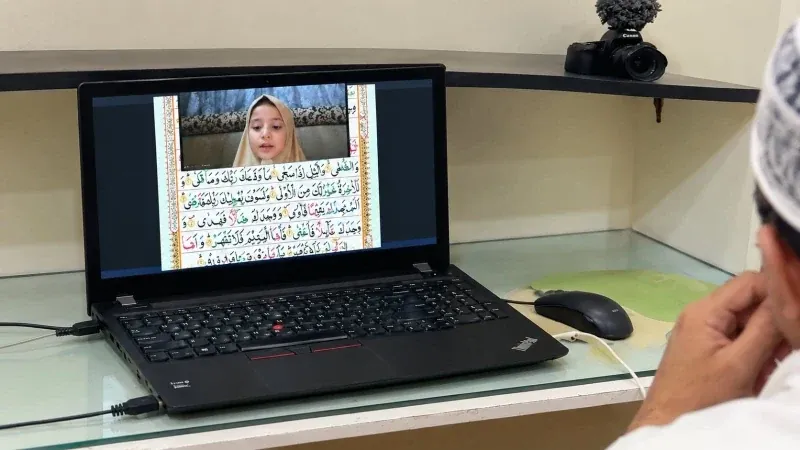
- Live one-to-one
- Hafiz and Hafiza teachers
- 35 students have completed Hifz
- Singapore Time
Tahfiz classes at a glance
| Who | Children from age 5, teenagers and adults |
| Format | Live, online, one-to-one |
| Class length | 1 hour (30 minutes for young children if parents prefer) |
| Days | 2 to 5 classes a week |
| Fees | SGD 50–70 a month for 1-hour classes, no registration fee |
| Teachers | Hafiz and Hafiza teachers with Ijazah and Sanad |
| Language | English |
| Timing | 24/7, in Singapore Time |
| Platforms | Zoom, Google Meet, Microsoft Teams |
| Free trial | 3 classes |
Online Tahfiz Classes in Singapore, One-to-One
Tahfiz, also called Hifz, means memorising the whole Quran by heart. In our online Tahfiz classes, one student and one Hafiz or Hafiza teacher meet live on video. The student recites the new lesson from memory, then goes back over recent and older lessons, and the teacher hears every word.
This is part-time Tahfiz in Singapore that your child does from home, alongside school. Adults fit it around work. It isn’t a full-time tahfiz school, and there’s no travelling to a centre.
The Prophet ﷺ said: “The best among you are those who learn the Quran and teach it.” (Sahih al-Bukhari 5027)
Hifz is easier if the student can already read the Quran correctly. If your child is still learning to read, start with our Iqra classes or Quran reading with Tajweed first. The teacher can tell you which one fits during the free classes.
Ways to Study Tahfiz With Us
Full Hifz of the Quran
The complete Quran, from Juz 30 through to the end. It usually takes 2 to 3 years, depending on how many days a week you study.
Juz ‘Amma or Selected Surahs
Some families want their child to memorise Juz ‘Amma first and decide later. Others want particular surahs, for example the short Surah Lazim from Juz ‘Amma, or longer surahs many people recite regularly, such as Al-Mulk, Al-Waqi’ah, Ar-Rahman, As-Sajdah or Al-Kahf. You choose the surahs. The fees are the same as for full Hifz.
Already Memorised Some Juz?
If you’ve been to kelas tahfiz or hafazan classes before, you don’t start again. During the free classes the teacher listens to what you’ve memorised and you continue from there.
Revision Classes for Huffaz
For students who have already finished Hifz and want to keep it strong. How much you revise in each class depends on what you can manage.
How a One-Hour Tahfiz Class Works
Every class follows the same order:
- Sabaq (new lesson): the student recites the new portion they prepared at home.
- Sabqi (recent lessons): the student goes back over the last few lessons so they don’t fade.
- Manzil (older juz): the student recites from juz they finished earlier.
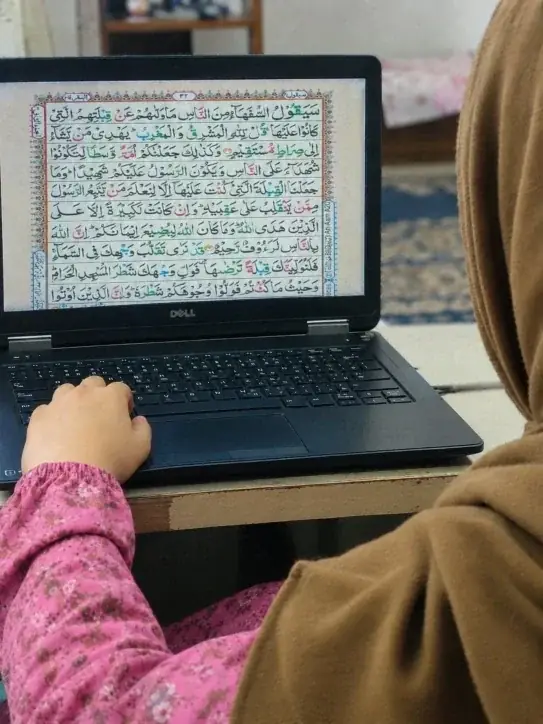
The teacher follows the page on screen and corrects mistakes straight away, so a wrong word doesn’t become part of what the student memorises. Students also read the next lesson at home before class, which makes it much quicker to memorise.
Each juz is tested before the student moves on to the next one.
Young children can have 30-minute classes instead of an hour if parents prefer.
Where Hifz Starts and How Fast It Goes
Students start with Juz 30, beginning at Surah An-Nas and moving back through the short surahs. After Juz 30 they go to Juz 1 and continue in the order of the mushaf. By then the daily routine is set and memorising feels easier.
Juz 30 usually takes 2.5 to 3 months. That can feel slow, but it’s normal. At the start, the habit of memorising every day isn’t there yet. It builds with time, and the amount a student can memorise grows a lot. Staying regular in these first months matters more than speed.
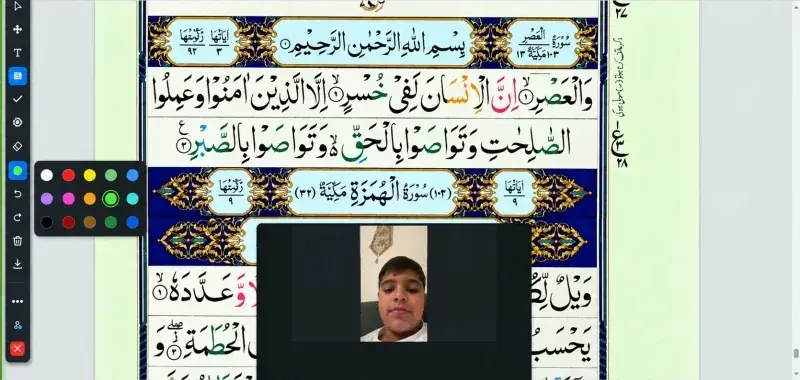
For a student coming 5 days a week, the new lesson often grows like this:
| Time since starting | New lesson per class |
|---|---|
| First weeks | 5–6 lines |
| After 2 months | about 10 lines |
| After 4 months | about 20 lines |
| After 6 months | about 30 lines |
| After 8 months | about 40 lines |
| After 10 months | about 50 lines |
These are typical numbers, not targets. Not every student reaches 50 lines, and the teacher sets each lesson by what the student can hold. Revision-only days, juz tests and holidays also take time, which is why full Hifz still takes about 2 years at 5 days a week.
Tahfiz Fees and How Long Hifz Takes
All Tahfiz classes are one hour. You choose how many days a week:
| Classes a week | Monthly fee | Typical time to complete Hifz |
|---|---|---|
| 2 | SGD 50 | about 3 years |
| 3 | SGD 55 | about 2 years 8 months |
| 4 | SGD 65 | about 2 years 4 months |
| 5 | SGD 70 | about 2 years |
The times are a guide, not a promise. They depend on the student, their attendance and their practice at home.
- There’s no registration fee, and the first 3 classes are free.
- Juz ‘Amma, selected surahs and revision classes cost the same.
- 30-minute classes for young children follow our usual 30-minute fees of SGD 35–50 a month. See all class fees.
Tahfiz Classes for Children
Children can start Hifz from age 5. It’s easier if they can already read the Quran, so some begin with Iqra and join Tahfiz later.
Young children get small portions, so the lesson never feels like too much. If an hour is long for your child, they can have a 30-minute class instead.
Parents can watch their child’s classes. We recommend keeping the camera on during lessons, though it can be switched off, and classes are recorded.
Girls can learn with a Hafiza teacher. Our Hafizas also teach boys up to age 10.
Tahfiz Alongside School and Exams in Singapore
Our students in Singapore study part-time. They pick 2 to 5 days a week and a time that works with school: early morning, after school, evenings or weekends.
Exam years are where many families worry. During PSLE, O-Level or A-Level preparation, classes can be paused. What we suggest instead is a lighter routine: stop new lessons for a while, but keep reciting the manzil, even in a 30-minute class. That way the juz already memorised stay strong, and the student picks up the new lessons again after exams.
Keeping the same days and the same teacher each week makes it much easier to stay on track.
Tahfiz Classes for Adults
It’s not too late to start as an adult. You can memorise the Quran part-time, around your job. If you’d like to improve your reading before you start, see our Quran lessons for adults.
Classes are one-to-one, so you go at your own pace and nobody else is listening. You can book early morning, late evening or weekend slots in Singapore Time, which helps if you work shifts. Men can learn with a Hafiz and women with a Hafiza.
“I work at a hospital and always wanted to memorise the Quran, but I could not go to an institute for classes. So I started online Tahfiz classes instead. Now I can do my Hifz from home, which is much easier for me. My teacher is very cooperative and always helps me when I need it.”
Aina Sofea, Singapore
When Memorising Gets Hard
Most students have weeks where Hifz feels difficult. These are the problems we see most and what the teacher does about them.
Forgetting what was memorised
Every class includes sabqi and manzil, not only new lessons. If a juz has become weak, the teacher sets 3 to 4 revision-only days to make it firm again before new lessons continue.
Mixing up similar verses
Some verses in the Quran are almost the same (mutashabihat), and they are a common reason students get stuck. We give students a separate PDF that lists these similar verses together, with the ayah numbers, surah names and juz, so they can see the differences in one place.
Feeling slow at the start
Five or six lines a day can feel like very little. It’s how nearly everyone starts. The teacher increases the lesson as the student gets used to memorising.
Losing motivation
Fixed days with the same teacher, a small daily target and the monthly test give students something steady to work towards.
Practising at Home
Regular practice at home matters more than long hours. Children and adults practise as much as their day allows, and the teacher sets a new lesson and revision target that the student can manage.
For students who have the time, we recommend 2 to 3 hours a day:
- about 1 hour on the new lesson
- about 30 minutes on sabqi
- 1 to 1.5 hours on older juz
This is a recommendation, not a requirement.
Students also read their next lesson before class, so they come prepared.
Your Hafiz and Hafiza Teachers
All 12 of our teachers have memorised the whole Quran, and every one of them teaches Hifz. Each holds an Ijazah with Sanad, and lessons are taught in English. Seven are male Qaris and five are Hafizas.
If a teacher isn’t the right fit, you can ask to change. Meet all our teachers.
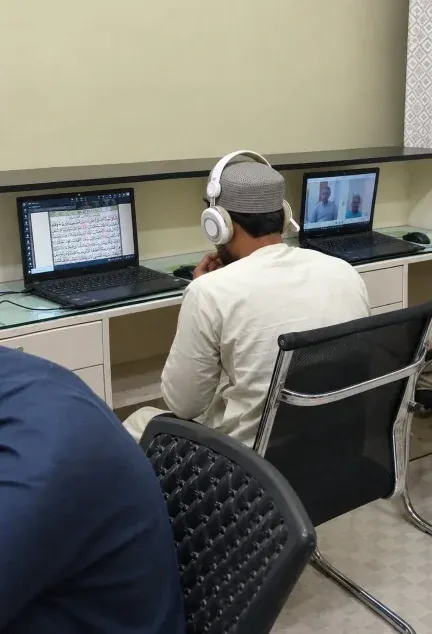
A few of them:
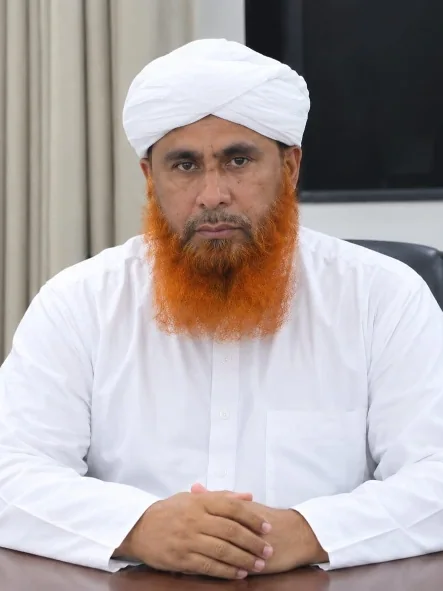
Qari Imran

Qari Mehmud Attari

Hafiza Ayesha
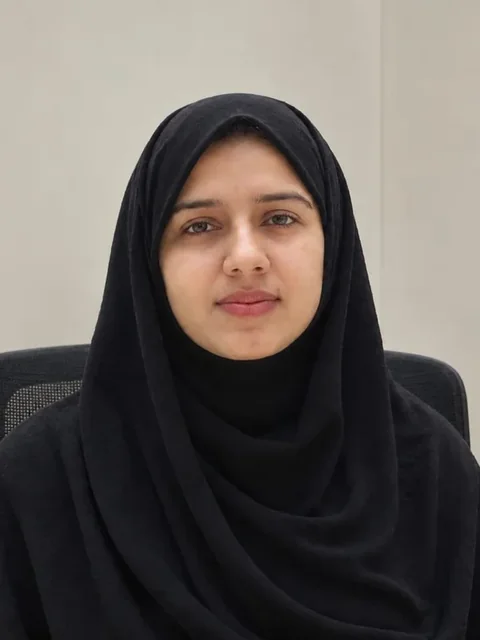
Hafiza Zainab
Hafiza Teachers for Girls and Young Boys
Many parents prefer a female Quran teacher for their daughter. Our five Hafiza (Hafizah) teachers teach girls, women and boys aged 5 to 10.
“My daughter started Hifz with her teacher Ayesha some time ago, starting from Juz 30. She has now completed 10 Juz. I am very thankful to Ayesha for teaching her and helping her with her Hifz. I am very happy to see my daughter learning and memorising the Quran.”
Maryam, Mother, Singapore
Monthly Tests, Reports and Results
Students sit a test every month. Parents then get a monthly report on WhatsApp showing how far the student moved that month and their test marks. On top of that, each juz is tested before the next one starts.
So far, 35 students have completed Hifz with our teachers. Students receive a Hifz certificate when they finish.
“My son started online Tahfiz classes with them two years ago. He completed his Hifz in less than two years, which made us very happy. His teacher was very good and always helped him when he had any difficulty. We are really happy with his progress and thankful to his teacher for all the support. I would recommend these classes to other parents in Singapore.”
Muhammad Hilmi, Singapore
After Completing Hifz
Finishing is a big day, but the Quran has to be kept. We recommend one full revision of the whole Quran straight after completing Hifz.
After that, students can continue with revision classes. Students who want to go further can also study for an Ijazah with Sanad. The Ijazah is issued in Arabic, in the traditional format. To understand the meaning of what you have memorised, you can also join our online Tafsir classes.
How to Start: 3 Free Tahfiz Classes
1. Book your free classes
Message us on WhatsApp. The first 3 classes are free.
2. The teacher checks where you are
The teacher listens to the student read and recite anything already memorised, then suggests where to begin: Juz 30, the juz you reached elsewhere, or Quran reading first.
3. Choose your days and times
Pick 2 to 5 days a week at times that suit you in Singapore Time. Classes run 24/7.
4. Join from home
Classes run on Zoom, Google Meet or Microsoft Teams. The Quran page is shared on screen as a PDF.
Before the first class, check:
- the student can read the Quran (if not, start with Iqra or Tajweed)
- a quiet place to sit for the lesson
- a phone, tablet or laptop with a microphone and camera
- for young children, a parent nearby
Missed a class? Make-up classes have no limit and are arranged on a day without a regular class.
Tahfiz Classes FAQs
How long does it take to memorise the whole Quran?
Usually 2 to 3 years with us. With 5 one-hour classes a week, about 2 years. With 2 classes a week, about 3 years. Practice at home and attendance make a big difference, so these are guides, not promises.
What is the best age to start Hifz?
Children can start from age 5. It’s easier once they can read the Quran correctly. Young children can have 30-minute classes if an hour is too long.
Does my child need to read the Quran before starting Tahfiz?
It helps a lot. A child who reads fluently can focus on memorising. If your child is still learning to read, start with Iqra or Tajweed classes first.
Do we need to know Arabic to memorise the Quran?
No. Students need to read the Quran correctly, not speak or understand Arabic. Lessons are explained in English.
Is it too late to start Hifz as a teenager or adult?
No. Adults memorise the Quran part-time around work, one-to-one, at their own pace. Men can learn with a Hafiz and women with a Hafiza.
How much will my child memorise each day at the start?
Usually 5 to 6 lines per class. This grows to about 10 lines after 2 months, and to around 50 lines after 10 months for many students.
Can the Quran be memorised in six months?
Not for most part-time students, and we don’t promise it. Our students usually take 2 to 3 years. Memorising properly, with regular revision, matters more than speed.
Where does Hifz start?
With Juz 30, beginning at Surah An-Nas. After Juz 30, students go to Juz 1 and continue in the order of the mushaf. Juz 30 usually takes 2.5 to 3 months.
Can I continue from the juz I’ve already memorised elsewhere?
Yes. During the free classes the teacher listens to what you’ve memorised and you continue from there.
Can my child keep up Tahfiz during PSLE or O-Level exams?
Yes. Classes can be paused, but we suggest stopping new lessons and keeping the manzil revision going, even in a 30-minute class, so nothing is forgotten.
How do you stop students forgetting what they memorise?
Every class includes revision of recent lessons (sabqi) and older juz (manzil). Each juz is tested before moving on, and weak juz get revision-only days.
Can I memorise only Juz ‘Amma or selected surahs?
Yes. Students can memorise Juz ‘Amma or chosen surahs such as Al-Mulk, Al-Kahf or Ar-Rahman. The fees are the same as for full Hifz.
Can my daughter learn with a female Hafiza?
Yes. We have five Hafiza teachers. They teach girls, women and boys aged 5 to 10.
How much do online Tahfiz classes cost?
SGD 50 to 70 a month for 1-hour classes, depending on 2 to 5 days a week. There’s no registration fee, and the first 3 classes are free.
Does Hifz work in online classes?
Yes. The class is live and one-to-one, so the teacher hears every word just as in person. Students sit a monthly test, and 35 students have completed Hifz with our teachers.
What happens after my child completes Hifz?
We recommend one full revision of the Quran. After that, students can join revision classes or study for an Ijazah with Sanad, which is issued in Arabic.
Start Tahfiz With 3 Free Classes
Book 3 free classes and see how our online Tahfiz classes in Singapore work for you or your child. The teacher will check the level and suggest where to start. You decide after that.