
Free Arabic Alphabet Chart for Kids (Huruf Hijaiyah)
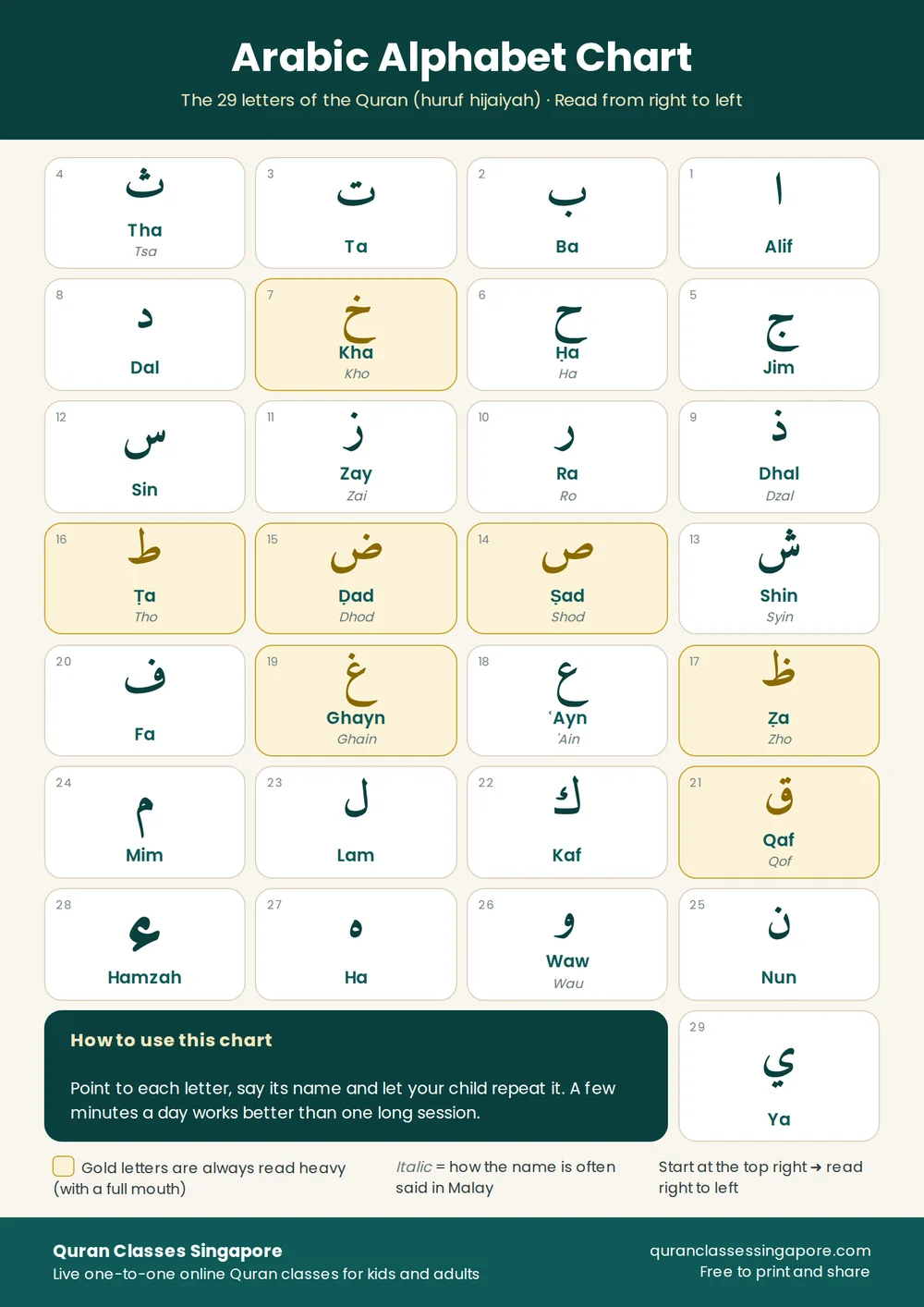
This free chart shows all 29 letters of the Arabic alphabet, the huruf hijaiyah your child meets on the first day of mengaji and in the first Iqra book. Each letter has its English name, how it’s often said in Malay where that’s different, and the heavy letters are marked in gold. Print it, stick it on the fridge or next to your child’s desk, and use the tips below from our Quran teachers.
A4, one page, 60 KB. You’re welcome to print it for home and share it with family, friends and your child’s teachers.
What Are Huruf Hijaiyah?
Huruf hijaiyah is what many Malay-speaking families call the letters of the Arabic alphabet, the letters the Quran is written in. The alphabet is usually counted as 28 letters. Many Quran-learning charts show 29 by counting Hamzah (ء) on its own, and our chart does the same, because that’s how our students learn them in class.
Arabic is read from right to left, so the chart starts at the top right with Alif and ends with Ya at the bottom.
What’s on the Chart
- All 29 letters, numbered in the order children learn them: Alif, Ba, Ta, Tha, and on to Waw, Ha, Hamzah and Ya.
- The English name under every letter, and in italics how it’s often said in Malay where that’s different, such as Tsa, Kho, Dzal and Wau.
- Seven letters in gold: خ ص ض غ ط ق ظ. These are always read heavy, with a full mouth. Getting them right early saves a lot of correcting later.
- A short note for parents at the bottom on how to use it.
How to Use the Chart at Home
Start with the sound
Our teachers teach the sound of a letter first, then its shape, and only later the small marks that change the sound, such as fathah (the short line above a letter). At home, point to a letter, say its sound clearly and let your child repeat it. Then do it again. Saying it many times is what makes both the sound and the shape stick.
Keep it short. A few minutes after school or before bed works better than one long session at the weekend.
Spot the dots
Many letters have the same shape and differ only in their dots. Our teachers use this to help children tell them apart:
- ب ت ث: Ba has one dot below, Ta has two dots above, Tha has three dots above.
- س ش: Sin has no dots, Shin has three dots above.
- ج ح خ: Jim has one dot below, Ha has none, Kha has one dot above.
Ask your child to count the dots before saying the letter. Most children pick this up quickly.
Letters Children Often Mix Up
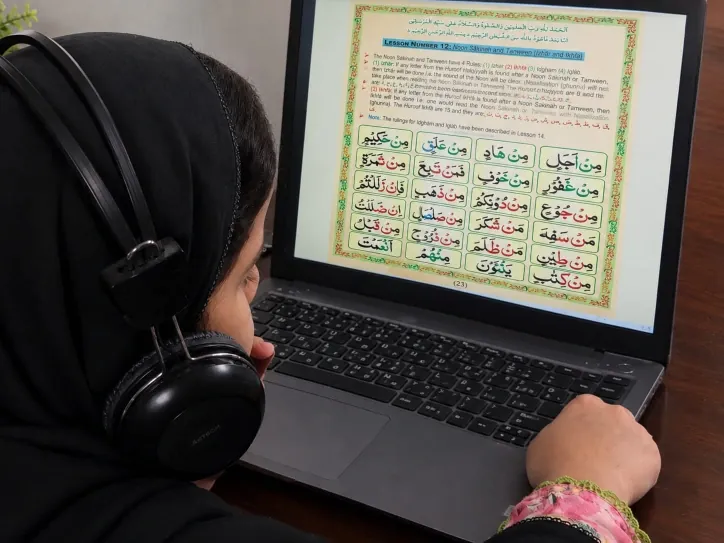
Some letters sound alike to young ears. These are the pairs our teachers correct most often, with where each sound comes from (its makhraj). A written description can only go so far: hearing a teacher say the letter, and being corrected, is the surest way to get it right.
| Pair | How to tell them apart |
|---|---|
| ث and س | For ث, the tip of the tongue touches the edges of the upper front teeth. For س, the tongue stays behind the teeth and the sound has a light whistle. |
| ذ and ز | ذ comes from the same place as ث: tongue tip at the edges of the upper front teeth. ز is like س, with the tongue behind the teeth and a whistle. |
| ح and ع | Both come from the middle of the throat. ح is a soft, breathy sound. For ع, the throat tightens a little and the voice comes through. |
| ظ and ز | ظ is heavy: tongue tip at the edges of the upper front teeth, with a full mouth. ز is light, with the tongue behind the teeth and a whistle. |
“Most children mix up ث and س, or ذ and ز, at first. We teach the sound first, then the shape, and repeat it until the child can hear the difference. When parents practise the same way at home, children learn much faster.”
Hafiza Ayesha, Quran teacher
A Common Mistake When Practising at Home
Many parents learnt to read the Quran years ago, without much focus on Tajweed or on where each letter comes from. If they practise with their child the way they were taught, the child hears one sound in class and a different one at home, and gets confused.
You don’t need to know Tajweed to help. Listen to how the teacher says a letter in class, or ask, and practise it the same way at home. Our teachers find this makes a real difference.
How Long Does It Take to Learn the Letters?
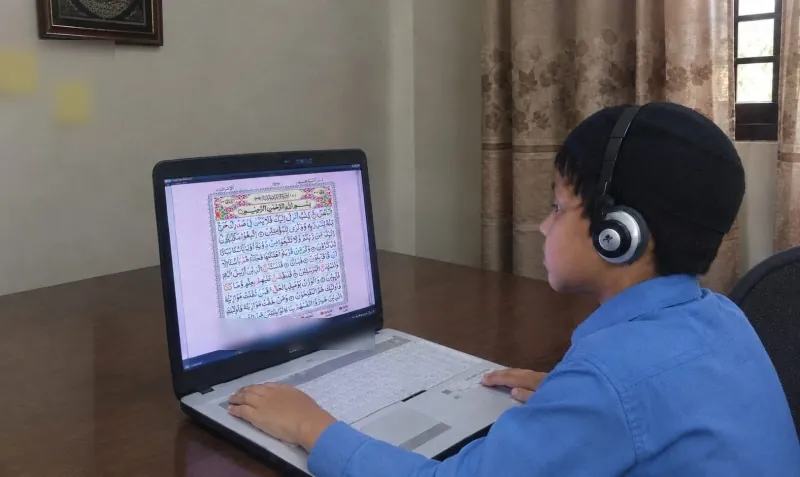
In our classes, many children start to recognise all the letters within 2 to 3 days, though every child is different and some need more time. Reading them correctly, with the right sound for each letter, takes longer. That’s what the Iqra books build step by step, and at 5 days a week they usually take at least 6 months.
“My son is 7 years old and has difficulty walking, so it was hard for us to send him to a Quran institute. That’s why we decided to try online Quran classes. It has only been a few days, but I’m already happy with his progress. He has learned the Arabic letters and can recognise them well. He is also learning which letters to read with a heavy or light sound and how to pronounce each letter correctly. I’m very happy to see him learning so well, and I hope he continues to make good progress in the future.”
Mohd Khairul, Singapore
After the Chart: What Comes Next
Once your child knows the letters on their own, the next step is joined letters. Inside a word, most Arabic letters change shape depending on where they sit, and a few, like ا د ذ ر ز و, never join to the letter after them. After that come the vowel marks (fathah, kasrah and dammah) and short words, which is where the Iqra books take over.
If your child is ready to start, see how our one-to-one Iqra classes work.
For Adult Beginners Too
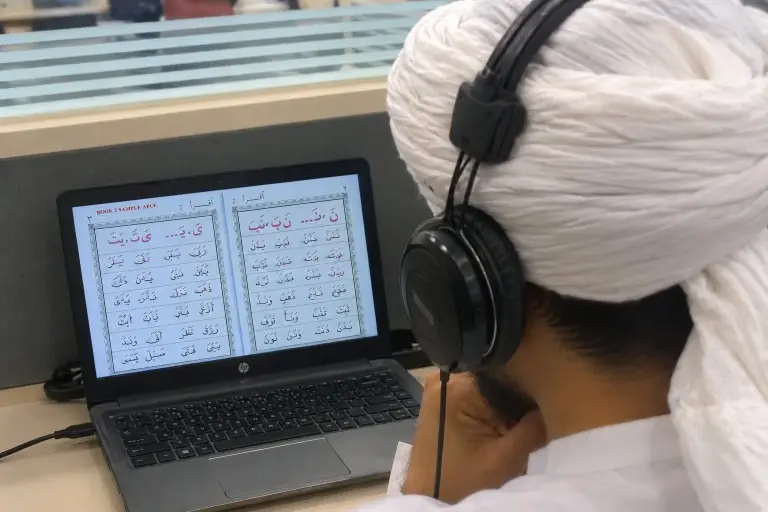
The chart is for any beginner. Our adult students range from their late teens into their 50s, and some started from the very first letter. Women learn with female teachers. Read more about our Quran classes for adults.
Arabic Alphabet Chart: Common Questions
What are huruf hijaiyah?
They’re the letters of the Arabic alphabet, the letters the Quran is written in. “Huruf hijaiyah” is the name commonly used by Malay-speaking families.
How many Arabic letters are there: 28 or 29?
The Arabic alphabet is usually counted as 28 letters. Many Quran-learning charts show 29 by counting Hamzah (ء) on its own, and some also add Lam Alif (لا), which is two letters joined together.
Is this the same as the Jawi alphabet?
Not quite. Jawi uses these Arabic letters to write Malay and adds six more for Malay sounds, such as چ (ca) and ڠ (nga). For reading the Quran, the letters on this chart are the ones your child needs.
Should my child learn the letter names or the sounds first?
Our teachers start with the sound, then the shape. Practising the same way at home avoids confusion.
How long does it take a child to learn the Arabic letters?
In our classes, many children recognise all the letters within 2 to 3 days, though every child is different. Reading them correctly takes longer and is built up through the Iqra books.
At what age can my child start?
Children can start from age 4, and 5 is a good age to begin. Very young children do best with short, regular practice.
Can adults use this chart?
Yes. It’s for any beginner, whatever their age.
Is the chart free to print and share?
Yes. Print it for home or share it with family, friends and teachers.
What should my child learn after the letters?
Joined letters come next, then the vowel marks and short words, as set out in the Iqra books.
Get a Teacher’s Help: 3 Free Classes
If you’d like a teacher to listen to your child’s letters and correct them one-to-one, we teach live online classes for children from age 4, with female teachers for girls. The first 3 classes are free.